Nestled in the fertile Bekaa Valley, the Anjar Ruins stand as one of Lebanon’s most fascinating archaeological sites. Founded by the Umayyad Caliph al-Walid I in the early 8th century, Anjar was once a thriving commercial hub linking the cities of Damascus, Homs, Baalbek, and Beirut. Today, its well-preserved ruins offer a rare glimpse into the sophistication of early Islamic urban design and architecture. Recognized as a UNESCO World Heritage Site since 1984, Anjar is a true gem of Lebanon’s historical landscape.
Unlike other ancient cities in Lebanon that evolved over centuries, Anjar was built as a planned city during the short-lived Umayyad dynasty (661–750 AD). It served as both a royal residence and trading center, showcasing the influence of Roman, Byzantine, and early Islamic architecture. Archaeologists believe Anjar’s layout was inspired by Greco-Roman urban planning, with two main colonnaded streets crossing at right angles and dividing the city into four quarters.
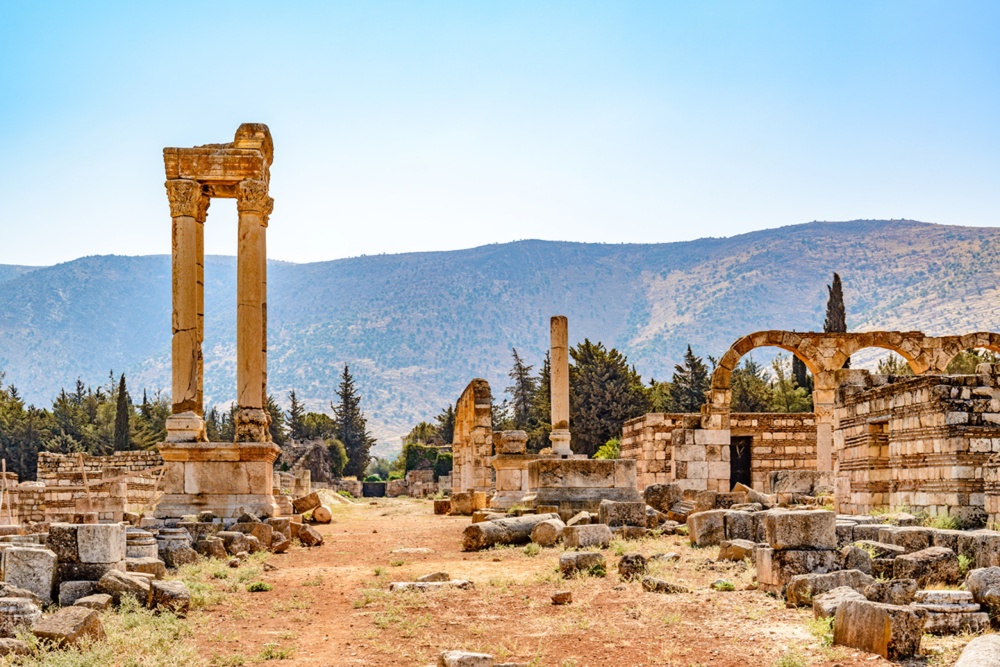
At its heart stood the Tetrapylon, a four-pillared monument marking the intersection of the main streets, symbolizing the meeting point of civilizations.
The Tetrapylon: Gateway of Civilizations
The Tetrapylon remains one of Anjar’s most striking features. Once adorned with arches and columns, it was the central focal point of the city’s street plan. The monument marked the intersection between the Cardo Maximus (north-south street) and Decumanus Maximus (east-west street)—a layout inherited from Roman traditions. Standing amidst ancient columns and stone pavements, the Tetrapylon captures the grandeur and precision of Umayyad urban design.
The Grand Palace: Seat of Power
To the south of the city lies the Grand Palace, believed to have been the official residence of the Umayyad ruler or governor. The complex included reception halls, courtyards, and arcades surrounded by tall stone walls. Excavations reveal traces of decorative mosaics and carved limestone, reflecting the luxurious taste of the early Islamic elite.
Close to the palace, a smaller structure known as the Little Palace was likely used for administrative or private purposes. Together, these buildings illustrate the combination of Roman architectural techniques and Islamic artistry, a hallmark of the Umayyad period.
The Urban Plan: A City Frozen in Time
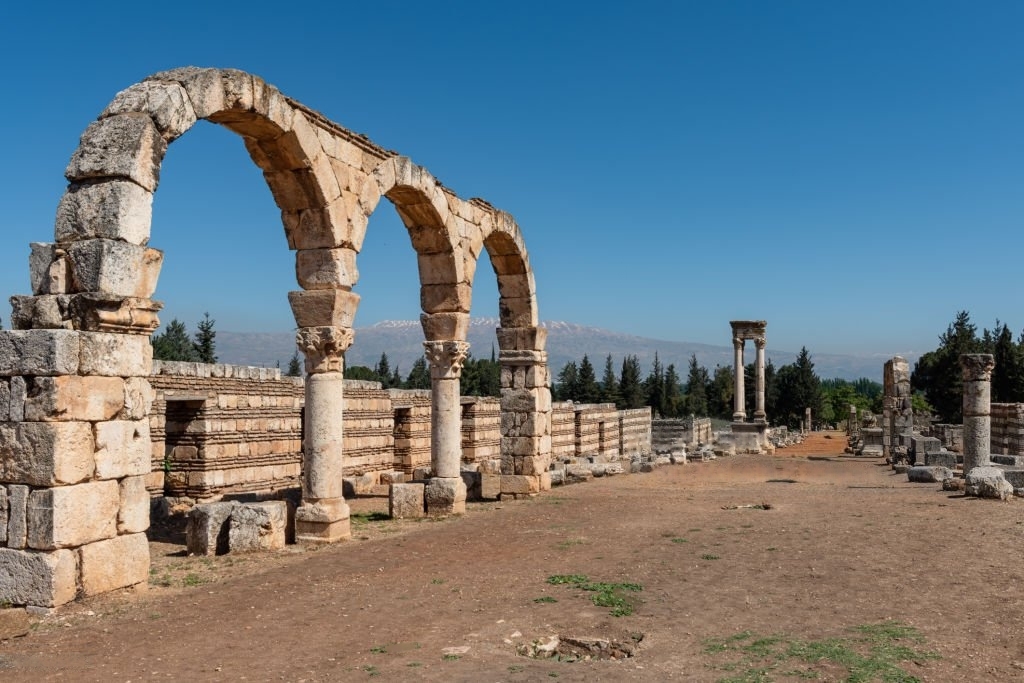
Anjar covers an area of about 114,000 square meters, enclosed by strong fortification walls with forty towers. Inside, the ruins show a city built with careful planning—public baths, a mosque, residential houses, and over 600 shops aligned along the main streets. This commercial activity positioned Anjar as an important trading post between the inland cities of Syria and the Mediterranean coast.
Over time, however, the city was abandoned following the fall of the Umayyad dynasty, leaving behind an extraordinary archaeological record of an entire 8th-century city preserved almost intact.
Planning your visit to Anjar Ruins is simple and deeply rewarding. Here’s everything you need to know to make the most of your trip to this ancient Umayyad city in the Bekaa Valley:
The archaeological site is open daily from 8:00 AM to 5:30 PM year-round. In winter, closing times may vary slightly depending on daylight hours.
Entrance to Anjar Archaeological Site is around 400,000 LBP for foreigners, 200,000 LBP for Arabs and 100,000 LBP for Lebanese (fees may vary).
Anjar is located about 58 km east of Beirut, in Lebanon’s Bekaa Valley near the Syrian border.
By car/private taxi: Around 1 hour 15 minutes from Beirut via the Damascus highway (Chtaura–Anjar route).
By bus: Minibuses from Beirut to Chtaura, then a short taxi ride to Anjar.
Nearby attractions: Combine your visit with Baalbek Ruins, Ksara Winery, or Zahle for a full day of exploration.
Comfortable walking shoes (paths are uneven and dusty)
Hat, sunglasses, and sunscreen in summer
Light jacket in spring and autumn


Discover Anjar with Lebanonaholic on our most popular full-day tour that includes Baalbek Ruins and Ksara Winery.
✅ Comfortable transport
✅ Flexible pickup & return times
✅ Small group & private options available
Choose your ideal tour and reserve your spot now!
Anjar lies about 58 km east of Beirut, near the Syrian border, between the towns of Chtaura and Masnaa in the Bekaa Valley.
You can reach Anjar in about 1 hour 15 minutes by car via the Damascus Highway (Chtaura route). Buses also run from Beirut to Chtaura, where you can take a short taxi ride to the site.
Wear comfortable shoes, bring water, sun protection, and a hat. A light jacket is recommended in spring or autumn, as the Bekaa Valley can be breezy.
Anjar is recognized by UNESCO (since 1984) for its exceptional example of early Islamic urban planning and its rare preservation as a complete 8th-century Umayyad city.